Start where trust begins.
We map the roles, sensitive actions, and account boundaries. A working login does not prove that private data stays private.
The question: what should this user be allowed to do?Offensive security and penetration testing services for your applications, networks, and defenses. Verified findings. Clear priorities. Practical fixes.
You request your own record. The application returns it.
GET /accounts/A200 OK"account_A"Illustrative test · synthetic accounts · no live requests.
Security is what we test.
It’s also how we operate.
500+ web application assessments personally completed by Abhimanyu Gupta
All industries welcome, with experience in pharmaceuticals, insurance, finance, travel, and AI-agent security.
Meet your security partnerThe people who run your engagement hold the field’s hardest hands-on certifications, the kind earned by compromising real machines under exam conditions rather than by a multiple-choice test.
 OSCPOffensive Security Certified Professional
 OSCE3Offensive Security Certified Expert 3
 CISSPCertified Information Systems Security Professional
How testing works
One permission check. Three steps from finding the gap to verifying the fix.
We map the roles, sensitive actions, and account boundaries. A working login does not prove that private data stays private.
The question: what should this user be allowed to do?Same account. Different record. If another user’s data comes back, we capture the request, response, and business impact.
The evidence: a reproducible authorization failure.After your team adds the ownership check, we test both sides: the unrelated account is denied; the rightful owner keeps access.
The outcome: a verified fix, not just a closed ticket.Two test accounts help us distinguish expected access from access that should never be possible.
Account A → own recordExpected accessWatch a test run
The same access-control test, replayed from the first request to the verified fix. Nothing here touches a real system.
account AGET /accounts/A
response200 OK
Expected: account A can read its own record.
Our services
Penetration testing, red teaming, application security testing, and source code review. Choose a starting point; we’ll agree the scope, access, and safeguards with you before testing.
For your team
You don’t need to know every security term to choose a useful next step. Find the path that fits your team.
Recorded investigations
See how Web3 Forensia follows public activity, examines the evidence, and makes the limits clear. These are recorded product demonstrations, not client engagements.
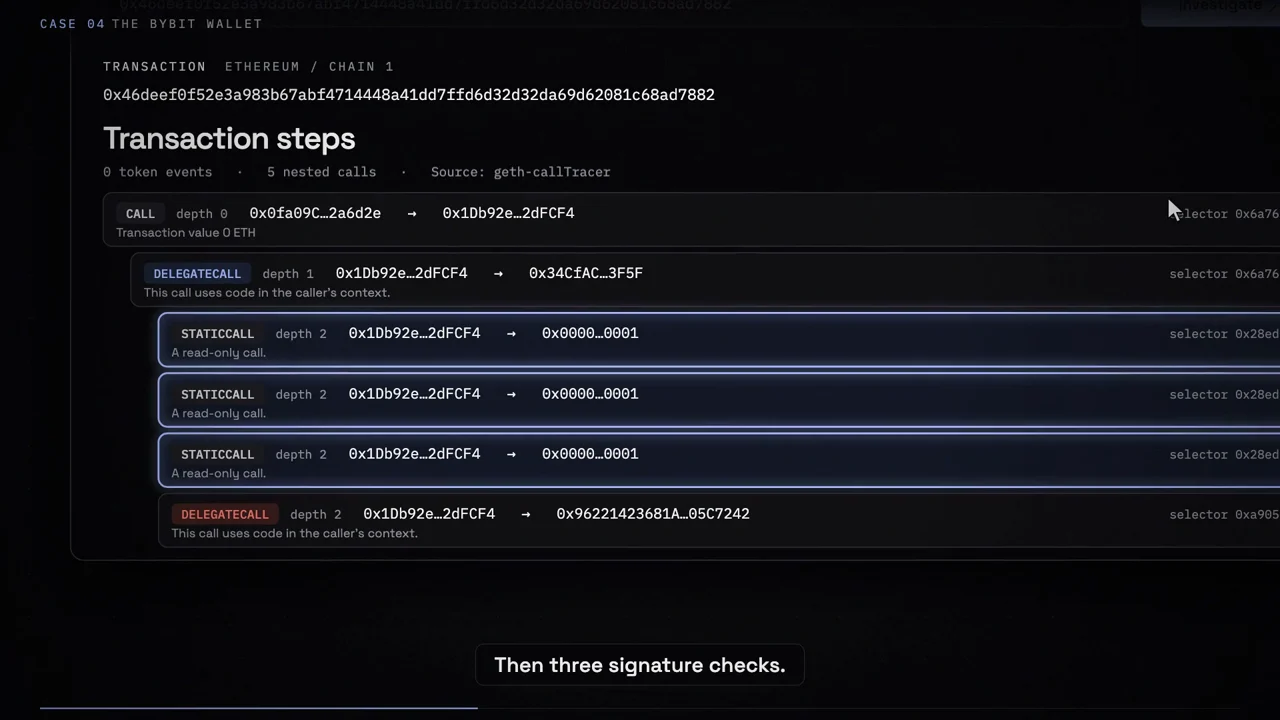
OVERWATCHCase film 01Recorded demo
1:24
Web3 Forensia walkthrough
Bybit investigation
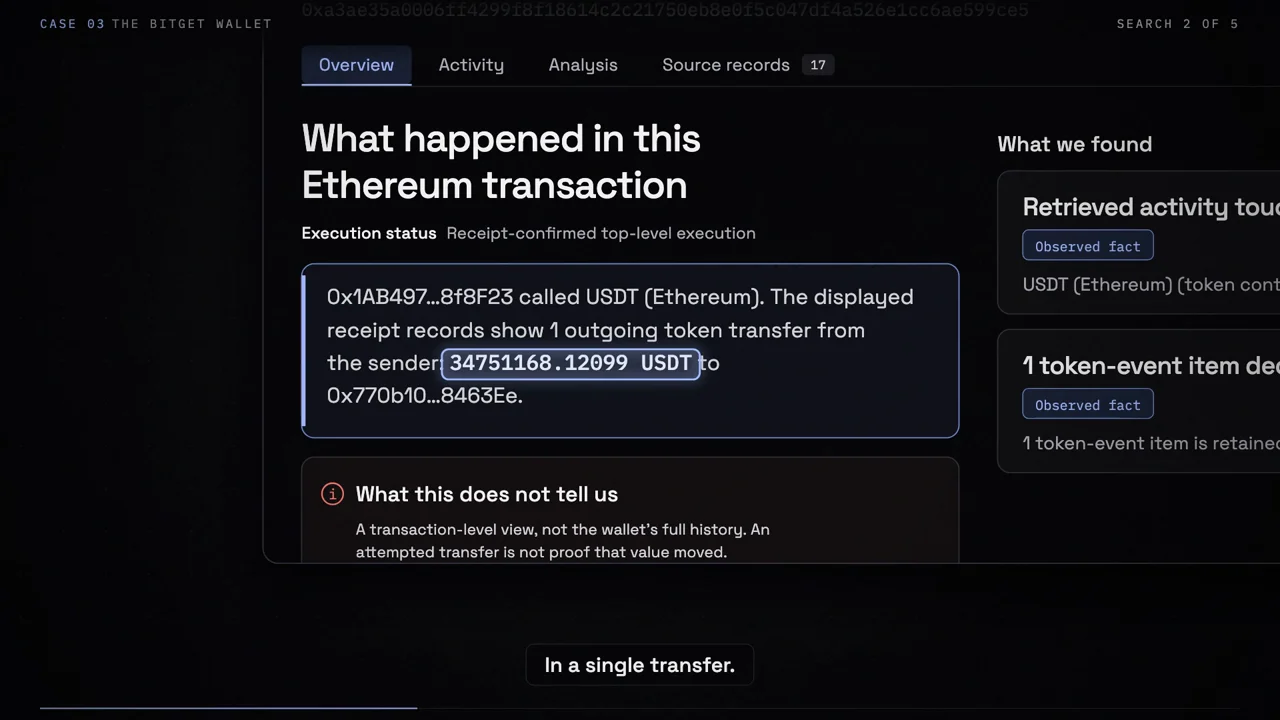
OVERWATCHCase film 02Recorded demo
1:51
Web3 Forensia walkthrough
Bitget investigation
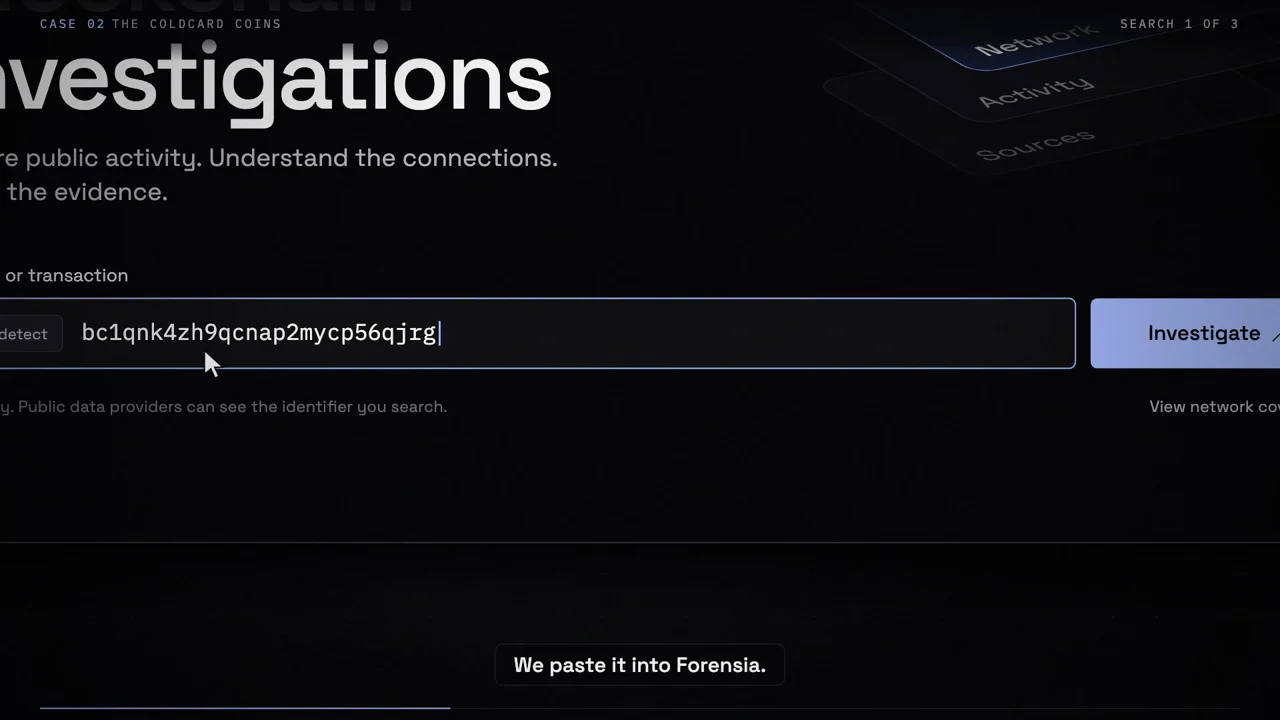
OVERWATCHCase film 03Recorded demo
2:06
Web3 Forensia walkthrough
Coldcard wallet investigation
Explore the transaction and contract evidence shown in this Web3 Forensia walkthrough. Read the execution trace and contract context.
Distinguishes on-chain observations from sourced attribution. Recorded demonstration, not live data.
Service walkthroughs · illustrative, not client reports
Scope & what you receive
Security testing isn’t one-size-fits-all. Choose what you want to assess and see what shapes the engagement. Pricing is confirmed after scoping.
01What goes in
02What comes out
A finding is only useful when someone can act on it. Explore what goes into the handoff, from reproduction steps to the retest result.
GET /accounts/B → 200 OKIllustrative walkthrough, not a client report.
Explore case studiesNot sure where to start? Tell us what you’re building. We’ll help define the assessment.
Free tools
Built for the work we do every week, and left open for everyone else. Four of the five run entirely in your browser, so the email you are suspicious about, the link you were sent, the token you found in a log and the file that arrived with it never leave your machine.
Explore practical security guides, from account boundaries to threat intelligence. No sales conversation required.
FAQ
Start with one conversation
Tell us what you need. A senior operator replies within one business day. No sales pipeline, no bot.
Reach the founder directly